


Despite negotiations between the UK and EU having formally ended, the implications of Brexit and the effect it may have on successfully attracting international students in the future remains unclear. As it stands with the UK still part of the EU, the university onboarding process for international students means fewer regulations and lower tuition fees and it’s unlikely that Brexit will change this process for the worse. However, in the event of a possible “hard-Brexit” scenario, international students applying to study in the UK may be vetted through the same process as European students, meaning higher tuition fees and other penalties being imposed – swaying international students to consider studying in their home country or other countries.
Recent research on international students suggests that despite the UK currently attracting the second-highest number of international students, it’s likely to lose its position in the coming months to closely competing countries, such as the USA, as the bid for international students becomes more aggressive in the face of Brexit.
As of 2015, the total number of students living outside of the EU enrolled in UK universities made up a third of all students and universities are keen to keep this figure from declining, as the value of international students is imperative. For every 11 international students enrolled at a university in the UK – combined they contribute £1 million to the British economy. As well as significant profitable value, universities seek to attract international students to supply capacity to research, bring diversity to innovative ideas and to create a multicultural academic environment which helps universities remain competitive in world league table surveys.
Credit: Universities.UK
Whilst competing nations are taking the opportunity to promote their international education offerings in Britain’s period of political uncertainty, there are several marketing strategies that UK higher education institutes could consider to help retain students and remain competitive. As we’ve previously discussed in our ‘what do students look for in a prospective university’ post, it’s common knowledge that Universities across the UK already pump millions into advertising, campus investments and more in an attempt to attract students. But is this investment well-placed when it comes to attracting international students in the face of Brexit? Does one digital strategy communicate effectively overseas in one location, but not in another?
Britain is one of the most dynamic and entrepreneurial environments in the world and UK universities must step up their digital strategies to keep international students wanting to study in the UK. At AlphaGraphics, we work to support universities by collaborating on international campaigns tailored to attracting and securing international students in this digital age. To help your university improve its strategy for prospective students, we’ve put together our top recommendations to outline how you can engage more efficiently with your international audience.
1. Consider your online presence
In 2017, a survey conducted by Student Survey Report revealed ‘82% of international students consult social media before making an enquiry at university’ – which reinforces the importance of social media in the face of targeting international students. Social media is the universal preferred method of gathering research on different prospectuses and is ultimately the lead driver when it comes to making decisions. Whether your social media strategy consists of blogs, testimonials, international student forums or video content – considering the experience for a non-UK based visitor is a crucial element. Showing that you’ve made the effort to diversify your content and offer multilingual options for international markets goes a long way to creating a lasting impression. Work to create engaging content that is tailored towards a typical international student’s university journey, such as providing information on key areas of international involvement – including visa applications and deadlines.
2. International students favour different marketing channels
Whilst developing your international marketing strategy, be mindful of your target audience’s variety of social media preferences. In a recent study by Bond University investigating regional networking preferences – whilst Facebook appears to predominantly be the top choice across the board, universities should consider alternative platforms and tailor their strategies on a country-specific basis. For example, many popular social media networks are banned in China, so if the Chinese market is one of your key targeted audiences – consider regional specific channels such as Qzone. Below is a map of the top social media platforms in specific areas, highlighting alternative social media channels to consider – depending on which catchment areas your university is looking to target.
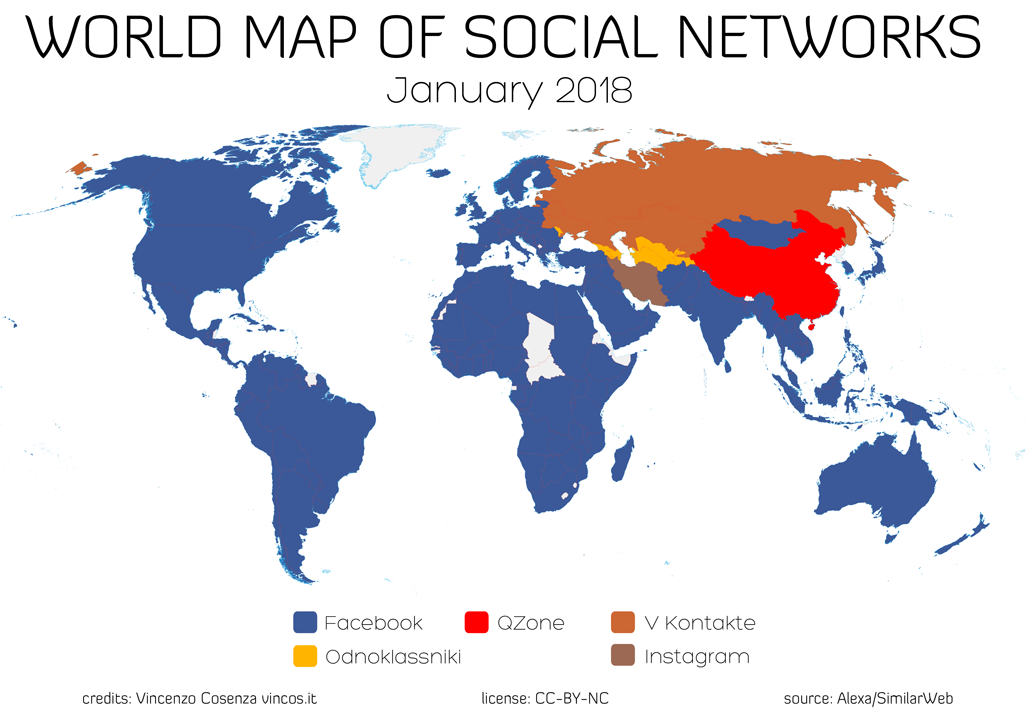
Credit: Vincos.it
3. Educate international students on Brexit
Whilst Brexit may be the elephant in the room, this political movement is certainly having an impact on international students decisions to study in the UK. Student recruitment consultancy, Hobsons, recently published a study highlighting considerable uncertainty as 30% of international students said following Brexit – they wouldn’t be likely to come to the UK to study. This, therefore, demonstrates an urgent need for Universities to address Brexit head-on and provide a wealth of information to reassure any growing concerns. Consider what questions a prospective international student may have about attending University post-Brexit – what information will they be looking for and what concerns will they be expecting Universities to answer?
Take a proactive approach and deliver a FAQ page on Brexit, that is regularly updated with the latest news on advancements. Leverage this information and update email marketing campaigns to align with this strategy to demonstrate to students that you’re taking a serious, informative approach in regards to Brexit and reiterating the importance of international students to the UK.
4. Address your universities USPs
The competition for attracting international students is gradually becoming a steady competitive process and UK Universities need to consider how they can make their campus stand out against popular regional offerings. What makes your university favourable to an international student? Ask yourself these questions:
- Do you have award-winning facilities?
- What are your international league table positions?
- Can you offer international students security in the form of scholarships and bursaries in the face of higher Brexit fees?
- Do you have a diverse student population – with international ambassadors?
- Do you provide specific accommodation for international students, or are there external accommodation alternatives available close to campus?
- Are you an award-winning university?
- Do you provide placement options – are you paired with any international campuses?
Consider these questions and carry out a wealth of research amongst your existing international student population to see what factors influenced their decision to enrol with your university.
Ultimately, it’s evident that the current process of recruiting international students has to change as a knock-on impact of Brexit. The consequences of Brexit will mean the UK Higher Education sector inevitably has to revisit its existing strategies to effectively communicate international students are still desirable to UK universities – despite Brexit. As the recruitment environment grows competitively, universities should specifically tailor a number of campaigns to several catchment areas, through considering multilingual preferences, popular social media platforms and more. At AlphaGraphics, we can help universities create tailored, engaging digital campaigns tailored to a variety of international audiences. Get in touch with AlphaGraphics education team to see how we can help.
