

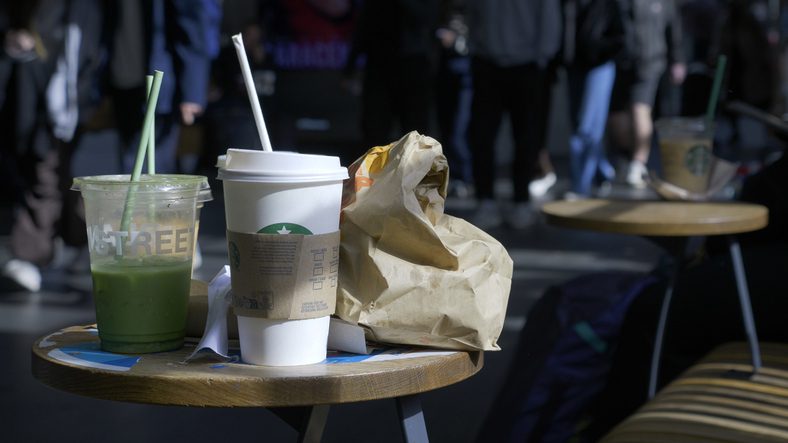
Every year, 3,415,000 tonnes of food waste is generated in the UK, and hotels, restaurants, pubs and other hospitality businesses generate around 600,000 tonnes of that. What’s even more shocking, is that the food going to landfill or recycling could be costing the hospitality and food sectors over £2.5 billion annually!
In fact, food waste in the UK hospitality sector is a two-pronged problem of epic proportions. Clearly, wastage on this level undermines all of the strenuous efforts made to cut operating costs and improve profit margins. Remaining competitive as a restaurant, hotel, gym or tourist attraction is hard enough, without literally throwing away money in the form of unused food.
However, these days, food waste is far more than a commercial concern. Public consciousness about waste has never been higher, and the race is on to protect the planet and make better use of natural resources, including edibles. Not least as food inequality has become a universal concern.
The fingers are wagging on single-use plastics and other long-term pollutants, but there is still high public interest in how hospitality brands are tackling the food waste issue.
Steps to reduce the amount of food discarded run across the whole hospitality business proposition. It extends from better ordering systems and tighter inventory controls to menus designed to simplify product acquisition and storage.
What is perhaps less appreciated is the role marketing can play in tackling hospitality food waste.
Marketing and order efficiency
Marketing has an important part to play in ensuring food stuffs are ordered efficiently, and that demand for your products dovetails with your inventory and daily deliveries.
This level of integration between supply and demand comes from having a team of marketing professionals who fully understand both your business and the target consumers you aspire to attract. The ideal scenario is having enough intuitive marketing activity to fill your booking system, avoiding dependence on walk-ins.
Ultimately, relying on walk-ins means you have the very difficult job of ‘guesstimating’ food inventory – resulting in more potential waste. By properly engaging a cross-channel marketing campaign, you can instead ensure that you are fully booked and have more of a ‘just in time’ approach to stock control.
Improved order efficiency can also be an off-shoot of market research – such as printed feedback forms and suggestion slips. Setting up systems to gauge potential take-up of new menu items can be vital. Experimental food offerings can be pre-tested via customer focus groups, for example. Again, this allows you to create an efficient menu – with just enough choice to satisfy customers and reduce waste, instead of a plethora of choice and food waste to match.
Raising awareness, brand values and a social conscience
Marketing remedies for the ethical fallout from food waste can serve to provide valuable PR benefits for hospitality businesses.
In fact, through robust awareness campaigns, it is possible to make your unwanted food stuffs a marketing advantage! This involves taking ownership of this important issue and using printed items, including menus and venue signage, to showcase the steps you are taking to control or re-use unwanted food stuffs.
For example, some big brands now deliver unusable but still edible items to food banks, and other local initiatives, to redistribute to those in need. There are also creative national projects to “reuse” unwanted food within social enterprises and charity ventures to provide community eateries, usually on a “Pay What You Feel” basis.
Many hospitality companies are also making their menu choices more sustainable and supporting local farms, cultivators and manufacturers. This creates a more agile supply chain, and a valuable marketing “edge”. By prioritizing sustainability, these companies not only cater to the growing awareness among consumers but also align with the values of younger demographics. As hospitality brands adapt their marketing strategies for Generation Z, they can effectively communicate their commitment to responsible sourcing and environmental consciousness. This approach not only enhances brand loyalty but also attracts a socially conscious customer base eager to support ethical businesses.
Purpose-driven campaigns can be used to show that your business is not just about profit, but that you actually care about your community, the environment and smaller local businesses. These core values position you in a positive light, while beneath them you manage the food waste situation more adroitly.
Aligning your offering to customer expectations
The above point links to the marketing focus required to properly manage your customers’ expectations, and to attract increased sales.
The quality of the food on their plate is important, but so is matching your kitchen output to what customers want when they walk through the door.
Positioning and promoting your restaurant, hotel, café or pub properly will keep demand constant, avoiding worrying dips in custom and the residual food wastage. Put simply, you need a very well thought out strategy that marries what target customers want and need, to exactly match your menu. The chefs, marketing team and management need to work together to ensure that there is enough variety in the offering to promote it, but not too much in order for the chef and his/her team to remain efficient and for management to be able to keep stock levels accurate and avoid waste.
Integrating marketing to create “lean” hospitality
By now you should see a pattern emerging. For too long marketing in the hospitality sector has been a “bolt on” function, after menu planning and food ordering has been ticked off.
Ultimately, you need to balance the wants and needs of your customers with the amount of choice on offer. Re-considering the number of options on offer and keeping your business at a constant level of ‘fully-booked’ will help you to reduce food waste, become more efficient and increase that all-important profit margin on each and every cover.
If this is an objective for your business, then contact AlphaGraphics’ specialist Hospitality team. The team here has the experience and expertise to create marketing campaigns that are measurably effective, purpose-driven and customer-centric. Our methodology could include personalised marketing materials, direct mail, maximising databases and printed items that offer a high ROI.
Call or email us for a no-obligation chat about how your hospitality business can reduce its food waste while increasing profits by integrating your marketing with your entire business operations.
